What is the VAT rate in Spain? Current VAT rates Spain 2026


Are you planning to run a business in Spain, investing in real estate, or maybe you just want to better understand how the tax system works in this country? One of the most important taxes that every entrepreneur and consumer encounters is VAT. In this article, we explain how much VAT is in Spain in 2026, what the applicable rates are, who the reduced VAT rates apply to, and what the rules for tax settlement are for companies. You will also find out how often VAT returns must be filed in Spain and where to check the current regulations. If you are interested in the topic of VAT in Spain, this guide will dispel your doubts and help avoid mistakes in tax settlements.
What will you find in the article?
How much is the basic VAT rate in Spain?
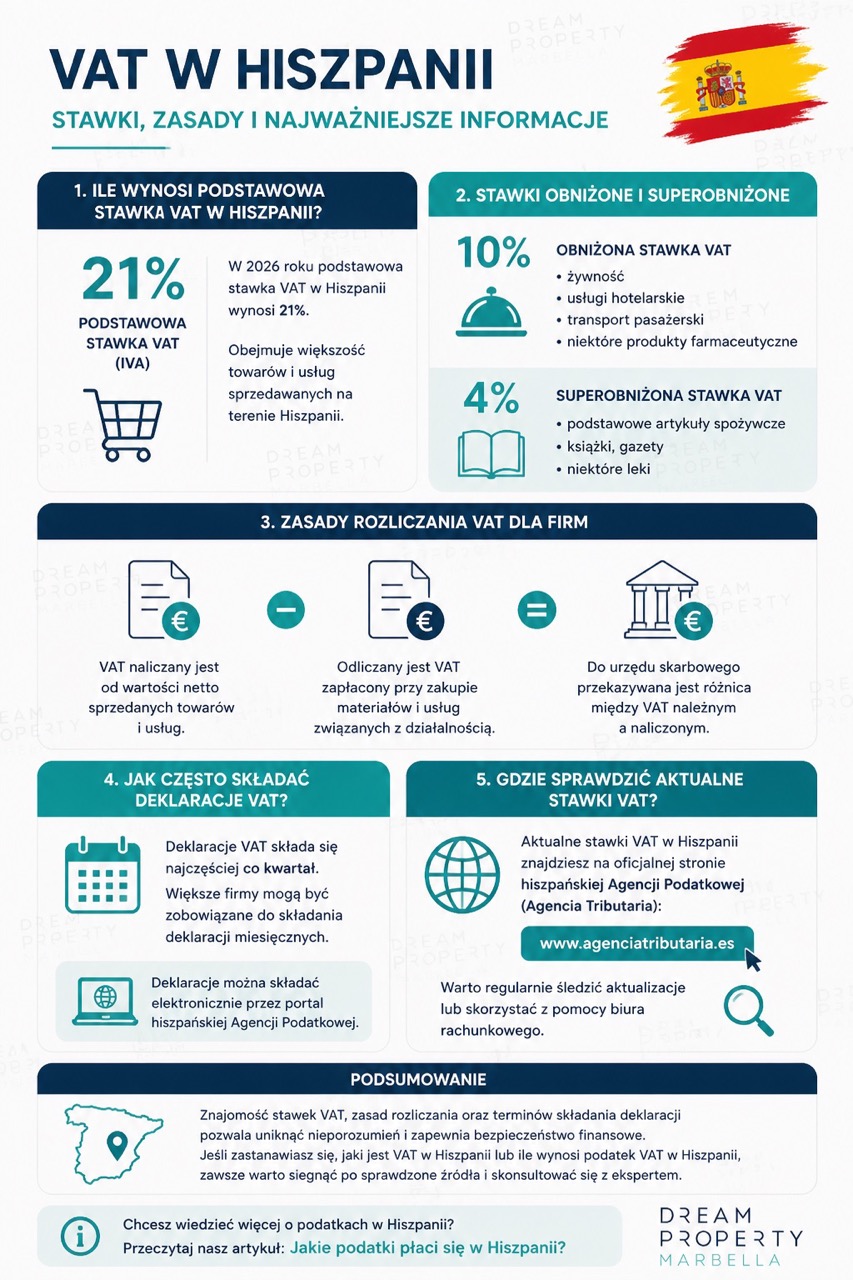
VAT in Spain, known as IVA (Impuesto sobre el Valor Añadido), is one of the most important indirect taxes in this country. In 2026, the basic VAT rate in Spain is 21%. This means that most goods and services sold in Spain are subject to this rate. It is worth knowing that the VAT rate in Spain in 2026 has not changed compared to previous years, which provides stability for entrepreneurs and consumers. If you wonder what VAT applies in Spain to the most commonly purchased products, the answer is: in most cases, it is exactly 21%. The level of VAT in Spain is crucial both for those conducting business and for tourists or investors.
Which goods and services are subject to reduced VAT rates?
Not all products and services in Spain are subject to the basic VAT rate. There are also reduced rates aimed at supporting certain economic sectors and protecting consumers. The reduced VAT rate in Spain is 10% and applies to selected goods and services, including some food products, hospitality, passenger transport, and certain pharmaceutical products. Additionally, Spain also has a super-reduced VAT rate of 4%, which covers basic foodstuffs, books, newspapers, and some medicines. Thanks to this, VAT in Spain is more consumer-friendly for people with lower incomes and supports the development of culture and education. If you want to know what VAT applies in Spain to specific products, it is worth checking the current regulations or consulting a tax advisor.
Note: although the basic VAT rate in Spain remains 21%, from March 22, 2026, to June 30, 2026, the Spanish government temporarily reduced VAT on certain electricity supplies from 21% to 10% as part of extraordinary anti-crisis measures.













































































What are the VAT settlement rules for companies in Spain?
VAT settlement in Spain for companies is based on principles similar to those in other European Union countries. Every company registered in Spain that sells goods or services subject to VAT must regularly settle accounts with the tax office. VAT in Spain is charged on the net value of sold goods and services and then the VAT paid on the purchase of materials or services necessary for running the business is deducted. In practice, this means an entrepreneur transfers to the tax office the difference between VAT due and VAT charged. It is worth remembering that the VAT rate in Spain and the settlement rules may vary depending on the type of business and company location. If you are interested in what VAT applies in Spain for your industry, it is worth seeking help from a specialist.
How often must VAT returns be filed in Spain?
In Spain, VAT returns must be filed regularly, usually quarterly. However, for larger companies or enterprises with high turnover, the tax authority may require monthly filings. This obligation applies to all entities registered as VAT payers in Spain. Timely submission of returns is crucial to avoid fines and interest for late payment. It is also worth remembering that the Spanish tax system allows electronic filing of returns, which greatly facilitates the whole process. If you wonder how much VAT is in Spain and how often you must settle, it is best to check the current guidelines on the tax office website or use the services of an accounting office.
Where can you check the current VAT rates applicable in Spain?
The current VAT rates in Spain for 2026 can be checked on the official website of the Spanish Tax Agency (Agencia Tributaria). This is where all changes concerning VAT in Spain are published, including information on basic, reduced, and super-reduced rates. It is worth regularly following this information, especially if you run a business or plan investments in Spain. Additionally, many accounting offices and industry portals publish updates regarding VAT in Spain. If you want to learn more about taxes in Spain, read our article: What taxes are paid in Spain?
Summary
VAT in Spain is a key element of the tax system, which influences the daily lives of residents, entrepreneurs, and tourists. Knowing the current VAT rates in Spain in 2026, settlement rules, and deadlines for filing returns allows you to avoid misunderstandings and ensures financial security. If you wonder what VAT is in Spain or how much VAT is in Spain, it is always worth using reliable sources and consulting an expert. Thanks to this, running a business in Spain becomes simpler and more predictable.