Reversed apartment rental Poland-Spain – how does it work and is it profitable?


More and more people are thinking about spending part of the year in Spain without giving up their apartment or house in Poland at the same time. One of the solutions that allows this is the reversed apartment rental Poland-Spain. In a simplified way, it means that the property in Poland starts earning for your life and rental in Spain, instead of being unoccupied for most of the year.
Below I explain exactly what this model is, for whom it makes sense, and how it looks in practice from the perspective of the owner, tenant, and real estate advisor.
What will you find in the article?
- What is reversed apartment rental in the context of Poland-Spain?
- What are the main principles of reversed rental operation?
- Who can benefit from reversed apartment rental Poland-Spain?
- What types of properties qualify for reversed rental?
- How is the rent amount determined in reversed rental?
- How long does a reversed rental agreement last and can it be extended?
- Does reversed rental affect property ownership?
- Summary
What is reversed apartment rental in the context of Poland-Spain?
In a classic scenario, you buy an apartment, e.g., in Marbella and rent it to tourists while you live in Poland. In the model of reversed apartment rental Poland-Spain, you do the opposite: your apartment in Poland becomes an investment asset, and Spain becomes a place to live or stay longer, which you finance with the income from Poland.
Example:
- You have an apartment in Warsaw, Gdańsk, or Krakow.
- You rent it out long-term, professionally managed.
- The rent you receive is used to rent an apartment in Spain or rent a house in Spain on the Costa del Sol, Costa Blanca, or another region.
You don’t sell your property in Poland; instead, you use it to test living in Spain, sometimes in several locations, before deciding to buy. A well-structured reversed apartment rental Poland-Spain allows you to balance costs so that the Polish rent largely or completely covers the expenses of renting in Spain.
What are the main principles of reversed rental operation?
For the reversed apartment rental Poland-Spain to work sensibly, several conditions must be met:
- Stable rental in Poland
Your Polish property should be rented under clear terms, preferably long-term, with a well-constructed agreement and a real possibility of enforcing payments. - Conscious choice of rental form in Spain
Before you start renting an apartment in Spain, it’s worth understanding the difference between long-term rental (larga temporada) and seasonal or tourist rentals. Our guides help with this, including: How to rent an apartment in Spain? and renting a house in Spain. - Tax calculation
Income from rental in Poland must be settled, and if you spend more than 183 days in Spain a year, the issue of tax residency arises. The topic is discussed in detail in the article renting an apartment in Spain and taxes in Poland.
In proper form, reversed apartment rental Poland-Spain should take into account both tax systems. - Management security
If you live in Spain daily, someone must take care of your property in Poland (contact with the tenant, repairs, settlements). On the other hand, in Spain it is worth cooperating with a local agent who knows the market and the real rates of apartment rental in Spain.
Who can benefit from reversed apartment rental Poland-Spain?
The model of reversed apartment rental Poland-Spain is not a solution for everyone but works great for several groups:

- Remote workers (remote, digital nomads)
People who work for Polish or international companies but can practically choose their place of residence freely. - Owners of apartments in large Polish cities
Apartments in Warsaw, Krakow, the Tri-City (Gdańsk, Gdynia, Sopot), or Wrocław achieve rents that often cover the cost of renting a house in Spain or a modern apartment on the Costa del Sol. - People planning to move for retirement
For those planning to eventually live in Spain, reversed apartment rental Poland-Spain is a great “trial period” – you can test different cities, the winter climate, access to healthcare, etc. - Investors with portfolios of several properties
Having several apartments in Poland, you can build a stream of income that not only covers renting an apartment in Spain but also generates a surplus.
What types of properties qualify for reversed rental?
In the model of reversed apartment rental Poland-Spain, two things are key: the property you rent in Poland and the one you rent in Spain.
In Poland, the best options are:
- 1–3 room apartments in large cities,
- properties in good technical condition, ready for renting “from tomorrow”,
- well-connected apartments (close to metro, tram, business districts).
In Spain, you have great flexibility:
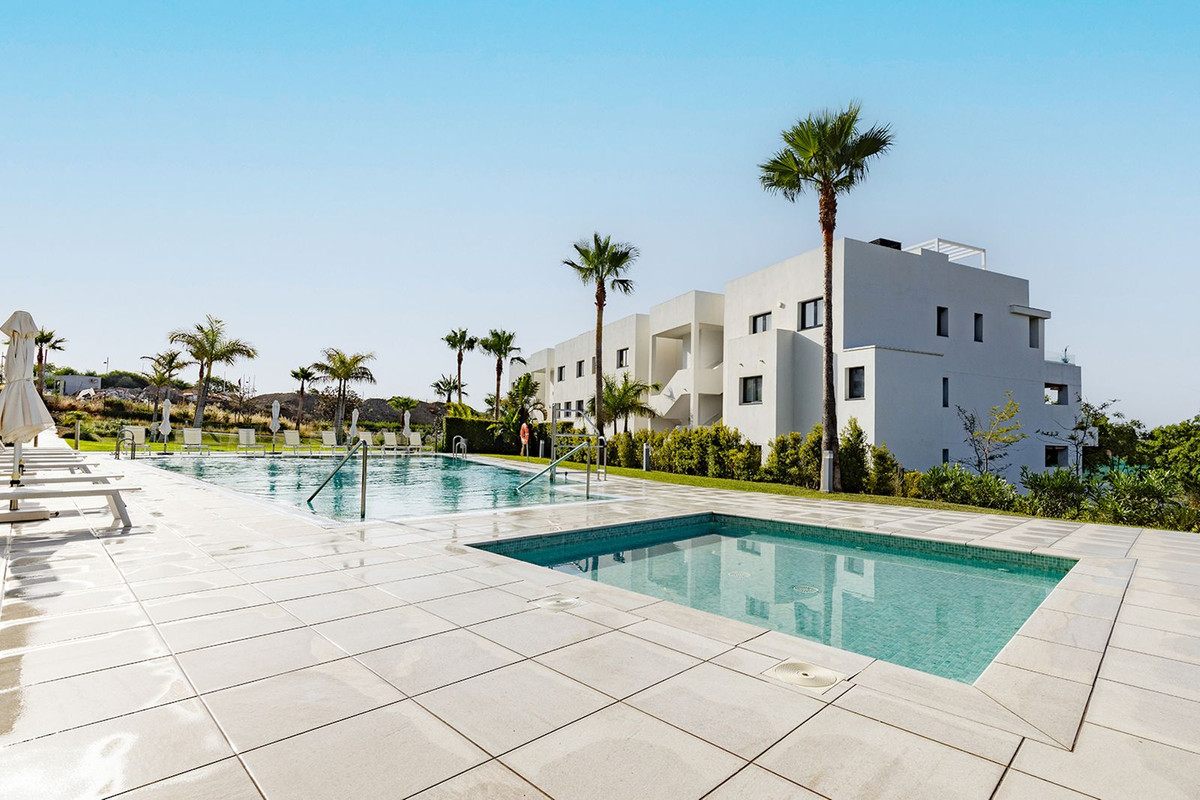
- apartments in complexes with a pool on the Costa del Sol, Costa Blanca,
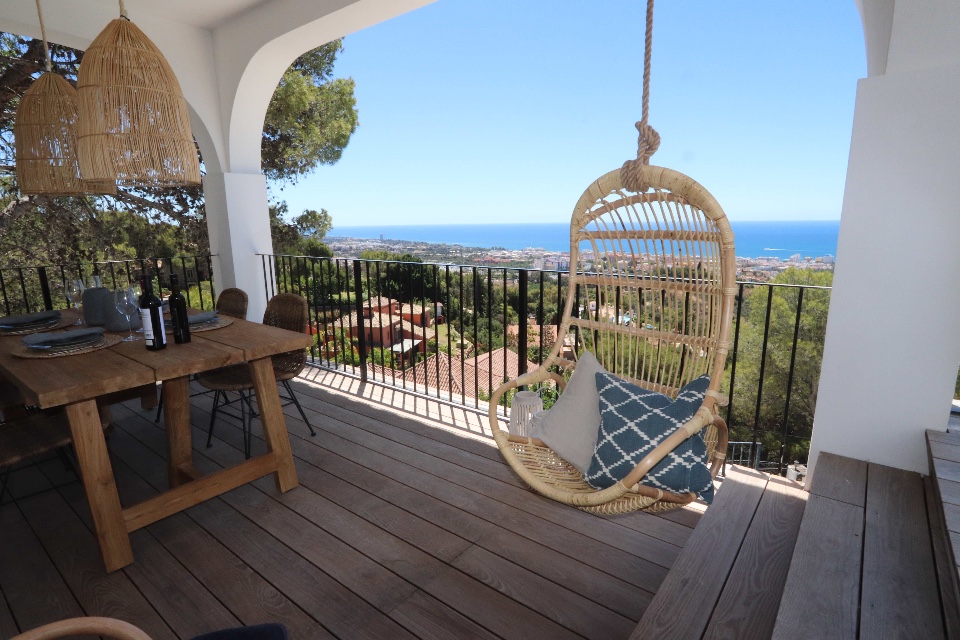
- renting a house in Spain (terraced house, villa in an urbanization) – a good solution for families or people who want a garden,
- apartments in city centers (e.g., Malaga, Valencia) – suitable for those who appreciate urban energy and easy access to transportation.
The property in Poland should provide stable income, while the choice of property in Spain depends more on lifestyle than investment return, since here you are a tenant, not an owner.
How is the rent amount determined in reversed rental?

Contrary to appearances, reversed apartment rental Poland-Spain does not involve a simple “1:1” ratio, meaning that rent from Poland perfectly covers all living costs in Spain. It is rather about creating a reasonable balance.
- On the Polish side, the rental rate results from the local market. Asking prices, actual transactions, and apartment standards are analyzed.
- On the Spanish side, the following are considered:
- seasonality (cheaper in winter than in July and August),
- region (Marbella will be more expensive than, e.g., Estepona or Mijas),
- complex standard and distance from the sea.
A well-designed reversed apartment rental Poland-Spain also takes taxes into account: income from Poland and possible obligations in Spain. The details of settlements are discussed in the article renting an apartment in Spain and taxes in Poland.
In practice, it often turns out that:
- income from Poland covers all or most of the cost of renting an apartment in Spain,
- you pay the difference (if any) from current work or business income.
How long does a reversed rental agreement last and can it be extended?
There is no single “statutory” length for this model; it is more a strategy than a specific type of agreement. However, it usually looks like this:
- Rental agreement in Poland
Usually 12 months with the possibility of extension. This provides income stability. - Rental agreement in Spain
For long-term rental (larga temporada), usually 6–12 months with the possibility of extension. For seasonal rentals: from a few weeks to several months.
In practice, many clients treat reversed apartment rental Poland-Spain as a 1–3 year project: first testing various places and lifestyles, then deciding whether to buy their own property in Spain, return to Poland, or continue “living in two countries.”
Of course, agreements can be extended, renegotiated, or terminated; it is important to properly record the termination conditions in advance on both sides.
Does reversed rental affect property ownership?

This is one of the most important issues: reversed apartment rental Poland-Spain in no way transfers ownership rights.
- In Poland, you remain the owner of the apartment; you only enter into a rental agreement.
- In Spain, you are the tenant, you use the property under specified conditions but do not acquire ownership.
So there is no “hidden catch” in the form of a change of owner. This is not a barter of ownership but a thoughtful use of income from one property in Poland to finance your life and stay in Spain.
Summary
The model of reversed apartment rental Poland-Spain is an interesting way to test life in Spain without the need to immediately sell the property in Poland. It requires good calculation, knowledge of real rental rates, support from local specialists, and a well-thought-out tax strategy but in return offers something priceless: the possibility of living in two countries and cultures simultaneously while maintaining financial and property security.